Cafe Bombon – Spain’s Sweetest Coffee Secret
There’s a coffee in Spain that most tourists never discover. It’s not on the standard “what to order in Madrid” lists. It doesn’t show up on Starbucks menus. But if you sit at the right bar in Valencia, Alicante, or anywhere along Spain’s Mediterranean coast and order a cafe bombon, what arrives will make you wonder why you’ve been drinking anything else.
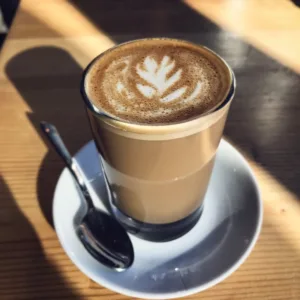
A cafe bombon is devastatingly simple: a shot of espresso layered on top of sweetened condensed milk, served in a small clear glass so you can see the two layers sitting side by side – dark espresso on top, thick golden milk on the bottom. It looks beautiful. It tastes even better.
If you’ve got a sweet tooth and you love coffee, this might be the drink you didn’t know you were looking for.
What Exactly Is a Cafe Bombon?
A cafe bombon (sometimes spelled “cafe bombon” or “cafe con leche condensada”) is an espresso served with sweetened condensed milk instead of regular milk. The classic ratio is roughly equal parts – one shot of espresso to one shot of condensed milk.
The drink gets its name from the Spanish word “bombon,” which means “candy” or “bonbon.” And honestly, that’s a pretty accurate description. The sweetened condensed milk adds a rich, caramel-like sweetness that transforms a standard espresso into something closer to a dessert than a regular coffee.
The key to the bombon’s visual appeal is the layering. Because condensed milk is denser than espresso, the two liquids naturally separate when combined. The thick, syrupy milk stays at the bottom, and the dark espresso floats on top. Served in a clear glass, it creates a striking two-toned effect that’s practically begging to be photographed.
Before drinking, you stir the two layers together. Or you can sip it as-is, starting with the bitter espresso and gradually hitting the sweet condensed milk. Some people prefer the journey from bitter to sweet. Others mix immediately. There’s no wrong way.
Where Does Cafe Bombon Come From?
The cafe bombon is most closely associated with Valencia and the Levante region of eastern Spain, though you can find it in bars throughout the country. Its popularity along the Mediterranean coast likely has connections to the region’s general love of sweet flavors and its proximity to trade routes that brought condensed milk into common use.
Sweetened condensed milk itself was popularized in the mid-19th century as a way to preserve milk before reliable refrigeration existed. In Spain – particularly in warmer southern and eastern regions – it became a pantry staple. Adding it to coffee was a natural step, and the cafe bombon was born.
The drink also has cousins throughout Southeast Asia, where sweetened condensed milk in coffee is extremely common. Vietnamese ca phe sua da, Malaysian kopi, and Thai coffee all use condensed milk, suggesting that wherever this ingredient is available, people independently figured out that it’s incredible in coffee.
How Cafe Bombon Fits Into Spanish Coffee Culture
Spanish coffee culture is beautifully varied. There’s a whole spectrum of drinks available at any bar, and most Spaniards have strong preferences about where on that spectrum they fall.
At the “no milk” end, there’s the cafe solo – a straight espresso. Then you move through the cortado (espresso with a small splash of milk), the cafe con leche (espresso with generous hot milk), and finally the cafe bombon (espresso with condensed milk) at the sweetest end.
The bombon occupies a unique position. It’s not an everyday coffee for most Spaniards – it’s more of a treat, something you order when you want something special. Think of it as the dessert of the coffee menu. Some people order it mid-afternoon as a pick-me-up that doubles as a snack. Others have it after dinner as a sweet finish to a meal.
That said, there are plenty of Spaniards – especially in Valencia and the surrounding regions – who drink bombons daily. It’s all about personal preference, and in Spain, nobody judges your coffee order.
How to Make Cafe Bombon at Home
This is one of the easiest specialty coffee drinks to make at home. You don’t need any barista skills, fancy equipment, or special techniques.
What You Need
- An espresso machine, Moka pot, or strong coffee maker
- Sweetened condensed milk (any brand works – just make sure it’s sweetened, not evaporated)
- A small clear glass (4-6 oz) – the clear glass is important for the visual effect
- A spoon
Step by Step
- Add the condensed milk first. Pour about 1-2 tablespoons (15-30ml) of sweetened condensed milk into the bottom of your glass. The exact amount depends on how sweet you like it.
- Pull your espresso. Make a single or double shot of espresso (or strong coffee from a Moka pot).
- Pour slowly. This is the key to getting those beautiful layers. Pour the espresso over the back of a spoon held just above the condensed milk. The spoon breaks the fall of the coffee and helps it settle on top of the denser condensed milk without mixing. Pour slowly and gently.
- Admire the layers. You should see a clear separation – golden condensed milk on the bottom, dark espresso on top. Take a photo if you want. It’s gorgeous.
- Stir (or don’t). Give it a good stir before drinking to combine the flavors, or sip it as-is for a gradually changing flavor experience.
Tips for the Perfect Bombon
- Use a clear glass. Half the magic of a bombon is visual. A ceramic mug hides the best part.
- Pour the espresso slowly. Rushing the pour is the number one reason the layers mix. Take your time.
- Adjust the sweetness. Start with a 1:1 ratio and adjust from there. Less condensed milk for a less sweet drink, more if you want full dessert mode.
- Try it iced. A bombon over ice in summer is absolutely incredible. Add the condensed milk, then espresso, then fill with ice. Stir and enjoy.
- Experiment with different espresso beans. Fruity, lighter roasts create an interesting contrast with the caramel sweetness of the condensed milk. Darker roasts give a more traditional, bold flavor.
Variations on the Cafe Bombon
Cafe Bombon with Cream
Some bars top the bombon with a small amount of whipped cream or milk foam, creating a three-layered drink – condensed milk, espresso, and cream. It’s indulgent and looks spectacular in a glass.
Iced Bombon (Bombon con Hielo)
Perfect for summer. Make the bombon as usual, then pour it over a glass of ice. The cold temperature amplifies the sweetness slightly, making it taste almost like an iced coffee dessert.
Bombon with Cocoa
A dusting of cocoa powder on top adds a chocolate dimension that pairs wonderfully with the sweet condensed milk and bitter espresso. It’s essentially a mocha-bombon hybrid.
Leche y Leche (Canary Islands)
In the Canary Islands, the “leche y leche” takes the bombon concept further by adding both condensed milk on the bottom AND a layer of milk foam on top. Three layers, three textures, one delicious drink.
Cafe Bombon vs Other Sweet Coffee Drinks
Bombon vs Vietnamese Coffee (Ca Phe Sua Da)
Very similar concept – both use espresso (or strong coffee) with sweetened condensed milk. The main differences: Vietnamese coffee uses a phin drip filter for a different extraction, and it’s typically served over ice. The flavor profiles are surprisingly close, though, which shows how universal the espresso-plus-condensed-milk combination is.
Bombon vs Cafe Con Leche
Cafe con leche uses regular hot milk, so it’s much less sweet and has a lighter body. The bombon is denser, sweeter, and more intense. If cafe con leche is breakfast, cafe bombon is dessert.
Bombon vs Cortado Condensada
These are essentially the same drink with different names. A cortado condensada is a cortado made with condensed milk instead of regular milk – which is exactly what a bombon is. Regional naming varies, but the drink is identical.
Where to Try Cafe Bombon in Spain
You can find cafe bombon at most bars throughout Spain, but it’s especially prevalent in:
- Valencia: The bombon’s spiritual home. Almost every bar and cafe serves it, and many locals order it daily.
- Alicante: Very popular along the Costa Blanca region.
- Murcia: Another bombon stronghold in southeastern Spain.
- Madrid: Available everywhere, though it’s more of a specialty order than a default.
- Barcelona: Found at most bars, and the specialty coffee scene has embraced it with high-quality espresso versions.
When ordering, just say “un cafe bombon, por favor” or “un bombon” and you’re set. If the bar doesn’t have condensed milk (rare, but possible at some modern spots), they’ll let you know.
Why You Should Try It
Look, I know what you’re thinking. “Sweetened condensed milk in coffee? That sounds way too sweet.” And yes, if you usually drink your coffee black or with just a splash of milk, the bombon is a big departure from your comfort zone.
But here’s the thing – the bitterness of the espresso and the intense sweetness of the condensed milk create a balance that’s genuinely special. It’s like dark chocolate or salted caramel – the contrast between bitter and sweet makes both flavors more interesting.
You don’t have to drink it every day. But everyone should try a cafe bombon at least once, preferably in a small Spanish bar on a warm afternoon, served in a clear glass with the layers perfectly separated. It’s one of those coffee experiences that sticks with you.
Frequently Asked Questions
Is cafe bombon the same as Vietnamese coffee?
They’re very similar – both combine strong coffee with sweetened condensed milk. The main difference is preparation: Vietnamese coffee uses a slow drip filter (phin) and is usually served over ice, while cafe bombon uses espresso and is traditionally served warm. The flavor profiles are close, though.
How many calories are in a cafe bombon?
A cafe bombon has roughly 100-130 calories, depending on how much condensed milk you use. Most of those calories come from the condensed milk, which is high in sugar and fat. It’s definitely more of an indulgence than a regular espresso (about 5 calories) or a cortado (30-40 calories).
Can you make cafe bombon with plant-based condensed milk?
Yes – coconut condensed milk is the most common plant-based alternative and works beautifully. It adds a subtle coconut flavor that actually complements the espresso nicely. Oat-based condensed milk also exists but can be harder to find.
What is the difference between condensed milk and evaporated milk?
Condensed milk is sweetened – it has sugar added and is thick and syrupy. Evaporated milk has no added sugar and is thinner, more like concentrated regular milk. For a cafe bombon, you must use sweetened condensed milk. Evaporated milk will give you a completely different (and much less interesting) drink.
Is cafe bombon popular outside of Spain?
It’s gaining popularity in specialty coffee shops worldwide, though it’s still not as well-known as cortados, flat whites, or cappuccinos. Southeast Asian countries have similar drinks (Vietnamese, Thai, and Malaysian condensed milk coffees), so the concept is familiar in many parts of the world even if the name “bombon” isn’t.