So You Want to Order Coffee in France?
You’re sitting at a little marble-topped table somewhere in Paris. The waiter approaches. You open your mouth and… freeze. What do you actually order? If you ask for a “coffee,” you’ll get a tiny espresso. If you ask for a “latte,” you might get a glass of milk. And if you mispronounce “noisette,” well, let’s just say the waiter’s eyebrow raise could win an Olympic medal.
Don’t worry. I’ve been there – literally, dozens of times – and I’ve made every possible coffee-ordering mistake so you don’t have to. This guide covers every French coffee drink you’ll encounter, the unwritten rules of cafe culture, and the exact phrases you need to sound like you’ve been doing this your whole life.
Whether you’re planning your first trip to Paris or your tenth visit to the French countryside, ordering coffee in France is one of those small things that makes a huge difference in your experience. Get it right, and you’ll feel like you belong. Get it wrong, and you’ll end up with warm milk wondering where everything went sideways.
Understanding French Coffee Culture
Before we dive into the drinks themselves, let’s talk about why French coffee culture is so different from what you’re used to back home. In France, coffee isn’t a productivity tool you gulp down during your commute. It’s a ritual – a pause in the day that’s meant to be savored.
The French relationship with coffee goes back centuries. Cafe Procope in Paris, which opened in 1686, is often considered the oldest coffee house in the city. Since then, cafes have been the living rooms of French social life – places where philosophers debated, artists sketched, and lovers whispered across tiny tables.
Today, that tradition lives on. You’ll notice that French people rarely walk around with giant to-go cups. They sit. They sip. They watch the world go by. And if you want to truly experience France, you should do the same.
One thing that surprises many visitors is how small French coffees are. If you’re used to a 16-ounce Americano, prepare for a bit of culture shock. French coffee is about quality and intensity, not volume. A standard espresso in France is about 30ml – roughly one ounce. It’s concentrated, bold, and meant to be appreciated in a few deliberate sips.
The Essential French Coffee Menu – Every Drink Explained
Un Cafe (or Un Expresso)
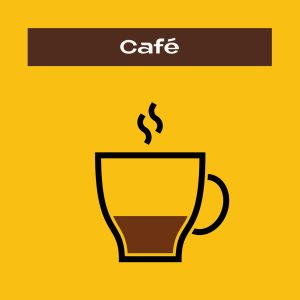
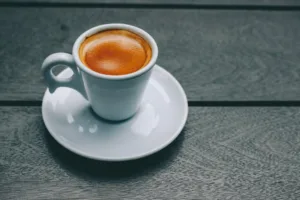
This is the default. When you sit down in any French cafe and say “un cafe, s’il vous plait,” you’re getting an espresso. Not a drip coffee, not a pour-over – a straight shot of espresso served in a small cup, usually with a sugar cube or two on the saucer.
You’ll also hear people say “un expresso” – and yes, the French spell it with an X, not an S. Don’t let anyone tell you that’s wrong. In France, it’s expresso, and that’s perfectly correct in French.
The quality varies wildly from cafe to cafe. Tourist-heavy spots near major landmarks often serve mediocre coffee because, well, they don’t need to try hard. Wander a few blocks into a residential neighborhood, and you’ll find cafes where the espresso is rich, smooth, and absolutely worth the detour.
Pro tip: If you want a slightly longer espresso, ask for “un cafe allonge” – more on that below.
Un Cafe Creme
This is probably the drink you’re looking for if you enjoy lattes or cappuccinos back home. A cafe creme is an espresso with steamed milk – think of it as France’s answer to the cafe latte. It’s typically served in a larger cup and is the go-to morning coffee for many French people.
Here’s the thing though – cafe creme is traditionally a morning drink. Order one after lunch and you might get a subtle look from your server. Will they refuse to serve it? Of course not. But in French coffee culture, milk-based coffees are for the morning, and espresso is for after meals. It’s not a hard rule, but knowing it helps you blend in.
The ratio is usually about one-third espresso to two-thirds steamed milk, though this varies by cafe. Some places serve it in a bowl-shaped cup, which feels wonderfully rustic and French.
Un Cafe Noisette
The noisette is one of my absolute favorites, and it’s a drink that doesn’t really have a direct equivalent in most other coffee cultures. It’s an espresso with just a dash of hot milk or milk foam – just enough to change the color to something resembling a hazelnut, which is exactly what “noisette” means.
Think of it as the French cousin of the cortado or the Italian macchiato. It’s perfect for those moments when you want something slightly softer than a straight espresso but don’t want a full milk coffee.
The noisette is also a great order if you want to signal that you know your way around a French cafe. It’s not on every tourist’s radar, so ordering one tends to earn you a small nod of respect from the server.
Un Cafe Allonge
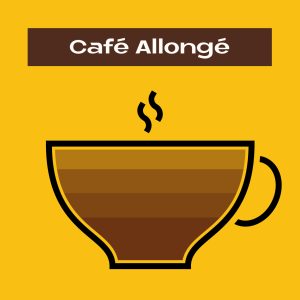
If a standard French espresso feels too intense or too small, the cafe allonge is your friend. It’s essentially an espresso that’s been “lengthened” (allonge means extended) with hot water. Yes, it’s basically what Americans call an Americano.
The result is a milder, larger cup of coffee that’s closer to what drip coffee drinkers are used to. It’s a perfectly respectable order and very common in France. You won’t get any judgmental looks for ordering one.
Some cafes make it by pulling a longer espresso shot, while others add hot water to a regular shot. The first method tends to taste a bit smoother, but honestly, both are fine.
Un Cafe au Lait
Wait, isn’t this the same as cafe creme? Not exactly. Traditionally, cafe au lait is made with brewed coffee (not espresso) and hot milk in equal parts. It’s more of a home drink – something the French make with their morning tartine (toast with butter and jam).
In cafes, the line between cafe au lait and cafe creme has blurred considerably. Many places use the terms interchangeably. But if you order a cafe au lait, you might get a slightly different preparation – sometimes served in a bowl, especially in more traditional establishments.
The bowl thing, by the way, is not a gimmick for tourists. French people genuinely drink their morning coffee from bowls at home. It’s one of those charming cultural details that makes France, well, France.
Un Double Expresso
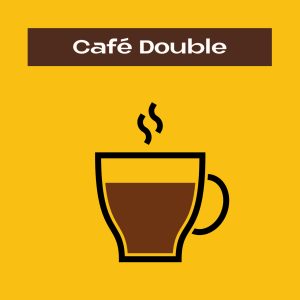
Exactly what it sounds like – a double shot of espresso. If you need a serious caffeine kick or if the standard tiny espresso just doesn’t cut it, this is your order. It’s becoming increasingly common in French cafes, especially in bigger cities where the pace of life has picked up.
Un Decafeine (or Un Deca)
Decaf espresso. Just say “un deca” and they’ll know what you mean. No shame in ordering decaf in France – it’s more common than you might think, especially after dinner. You can also combine it: “un deca creme” for a decaf with milk, or “un deca noisette” for a decaf with just a touch.
Un Cafe Gourmand
This is less of a coffee type and more of a French invention of genius. A cafe gourmand is an espresso served with a selection of small desserts – think a tiny creme brulee, a mini macaron, a sliver of chocolate cake. It’s typically offered as a dessert option at restaurants.
If you’re torn between coffee and dessert after a meal, the cafe gourmand lets you have both without committing to a full dessert. It’s usually priced between 7 and 12 euros, which is reasonable considering you’re getting coffee plus three or four mini treats.
Un Chocolat Chaud
Okay, this isn’t coffee, but it deserves a mention because French hot chocolate is in a league of its own. Rich, thick, and made with real melted chocolate rather than powder, a good French chocolat chaud is closer to drinking a melted chocolate bar than anything you’ve had at a chain cafe. If you’re not a coffee drinker, this is your order.
Un The (Tea)
Again, not coffee, but worth knowing. French cafes always have tea, and it’s usually decent. You’ll typically get a pot of hot water with a tea bag on the side. Nothing fancy at most cafes, but perfectly fine.
Terrace vs. Counter vs. Inside – The Pricing Secret
Here’s something that catches almost every visitor off guard: in many French cafes, the price of your coffee depends on where you sit.
There are typically three price tiers:
- Au comptoir (at the counter/bar): The cheapest option. Standing at the bar and drinking your espresso in two minutes like a local is the most affordable way to caffeinate. An espresso might cost 1.20 to 1.80 euros.
- En salle (inside at a table): A bit more expensive. You’re taking up table space and getting table service, so you’ll pay a premium – maybe 2.50 to 3.50 euros for the same espresso.
- En terrasse (on the terrace): The most expensive option. That charming sidewalk table with a view of Parisian life? It comes at a price. The same espresso could be 3.50 to 5 euros or more in touristy areas.
This isn’t a scam – it’s been part of French cafe culture for decades, and the prices must be displayed somewhere visible (usually on a board near the entrance or bar). Always check before you sit down if budget matters to you.
That said, there’s no time limit on your table. Once you’ve ordered, that seat is yours for as long as you want. You can nurse a single espresso for two hours while writing in your journal, and nobody will rush you. That’s the deal – you pay for the real estate, but you get to keep it.
The Unwritten Rules of French Cafe Etiquette
Always Say Bonjour
This is rule number one, and it applies to every interaction in France, not just cafes. When you walk in, say “bonjour” to the staff. When the server comes to your table, say “bonjour.” When you leave, say “au revoir” or “merci, au revoir.” Skipping the greeting is considered rude and will set the tone for your entire interaction.
Wait to Be Seated (Sometimes)
At busier cafes and restaurants, wait for the server to indicate where you can sit. At casual neighborhood spots, you can usually just grab an open table. When in doubt, make eye contact with a server and gesture toward a table. They’ll nod or redirect you.
Don’t Rush the Server
French servers are professionals – many make a career of it – and they’ll get to you when the flow allows. Waving frantically or snapping your fingers is a surefire way to get ignored. Make calm eye contact, perhaps raise a finger slightly, and wait. They’ve seen you. They’ll come.
Tipping Is Optional but Appreciated
Service is included in French prices (it’s the law), so tipping isn’t expected. However, leaving small change – rounding up to the nearest euro or leaving 50 cents to a euro for a coffee – is a nice gesture that’s appreciated. For a sit-down meal, 5-10% is generous. But for coffee? A few coins on the saucer is plenty.
The Check Won’t Come Until You Ask
In France, bringing the check without being asked is considered rude – it implies you want the customer to leave. When you’re ready to go, catch your server’s eye and say “l’addition, s’il vous plait” (the check, please). Or you can mime writing on your hand – the universal signal works everywhere.
Morning Coffee, Afternoon Espresso
As mentioned earlier, milky coffees are traditionally morning drinks. After about 11 AM, most French people switch to espresso. After lunch and dinner, it’s almost always straight espresso. You can order whatever you want whenever you want – nobody will refuse you – but following this pattern helps you fit in.
Useful Phrases for Ordering Coffee in France
You don’t need to speak fluent French to order coffee. These phrases will cover 99% of situations:
- “Bonjour, un cafe s’il vous plait” – Hello, an espresso please
- “Un cafe creme, s’il vous plait” – An espresso with steamed milk, please
- “Un noisette, s’il vous plait” – An espresso with a dash of milk, please
- “Un allonge, s’il vous plait” – A long/Americano-style coffee, please
- “Un double expresso, s’il vous plait” – A double espresso, please
- “Un deca, s’il vous plait” – A decaf, please
- “L’addition, s’il vous plait” – The check, please
- “Merci beaucoup” – Thank you very much
- “C’est combien?” – How much is it?
- “Je voudrais…” – I would like…
- “Avec du sucre” – With sugar
- “Sans sucre” – Without sugar
- “A emporter” – To go (takeaway)
Pronunciation tips: “S’il vous plait” sounds like “see voo play.” “Noisette” sounds like “nwah-ZET.” “Allonge” sounds like “ah-lon-ZHAY.” “Creme” sounds like “KREM” (not “cream”). Don’t worry about being perfect – the effort alone is appreciated.
Where to Find the Best Coffee in France
The Specialty Coffee Wave
France has traditionally been known for, let’s be honest, pretty average espresso. Many classic cafes use commercial-grade beans and dark roasts that can taste bitter and flat. But over the past decade, a specialty coffee revolution has swept through French cities.
In Paris alone, you’ll find dozens of excellent specialty roasters and cafes: Belleville Brulerie, Coutume, Lomi, Boot Cafe, Telescope, and many more. These places source high-quality beans, roast them carefully, and prepare them with the same attention a sommelier gives to wine.
Lyon, Bordeaux, Marseille, and other major cities have followed suit. If great coffee matters to you, seek out these specialty spots. They often coexist beautifully with the traditional cafe scene – you can have your expertly extracted V60 in the morning and your classic cafe creme at a traditional bistro in the afternoon.
Traditional Cafes Still Have Their Charm
That said, don’t dismiss the classic corner cafe. Yes, the coffee might be a simple, no-frills espresso from a commercial machine. But the experience of sitting at a zinc-topped bar, watching the barman work, listening to French conversations swirl around you – that’s worth more than the perfect extraction ratio.
Some of my favorite coffee moments in France have been at completely unremarkable neighborhood cafes where the espresso was decent, the croissant was fresh, and the morning light through the window was perfect. Coffee in France is about context as much as it is about the cup itself.
Common Mistakes Tourists Make (And How to Avoid Them)
- Ordering a “latte”: “Latte” means milk in Italian and French people know this. You might get a confused look or, worse, a glass of milk. Say “cafe creme” instead.
- Expecting free refills: This isn’t a thing in France. Each coffee is its own order.
- Looking for a grande/venti size: French coffees are small. Embrace it. If you need more volume, order a cafe allonge or just order a second coffee.
- Skipping the greeting: Always say “bonjour” before ordering. Always.
- Getting upset about slow service: It’s not slow – it’s the French pace. You’re not being ignored; you’re being given space to enjoy yourself.
- Asking for milk on the side: While possible, this isn’t the norm. If you want milk in your coffee, order the drink that already includes it (creme, noisette, etc.).
- Tipping American-style: Leaving 20% on a 3-euro coffee is generous to the point of being confusing. A few coins is perfect.
- Taking your coffee to go: While takeaway (“a emporter”) is becoming more common, especially in cities, the default in France is to sit and drink. If you want takeaway, specifically ask for it.
Coffee and Food Pairings in French Cafes
Coffee in France is often enjoyed with food, and knowing what to pair makes the experience even better:
- Morning: Cafe creme with a croissant or pain au chocolat. This is the classic French breakfast combo, and it’s classic for a reason. The buttery, flaky pastry and the creamy coffee are a match made in heaven.
- Mid-morning: An espresso with a tartine (toast with butter and jam). Simple, satisfying, very French.
- After lunch: A straight espresso. This is almost mandatory in France – the post-lunch espresso is a cultural institution. It signals the transition from the meal to the rest of the day.
- Afternoon: A noisette with a small pastry. If you need a pick-me-up around 4 PM, this is the way.
- After dinner: An espresso or a cafe gourmand. Never a milky coffee. Well, almost never.
Regional Differences Across France
Coffee culture varies a bit across France. In Paris, things tend to be more formal and prices are higher. In the south – Marseille, Nice, Toulouse – the pace is even more relaxed, and you might find yourself lingering over coffee for hours in the afternoon sun.
In Alsace (near the German border), you might encounter slightly different cafe traditions influenced by German coffee culture. In the Basque Country (southwest France), coffee culture blends French and Spanish influences – you might even find a cortado on the menu.
In smaller towns and villages, the local cafe is often the social hub of the community. Sitting there with a coffee in the morning is like reading the town’s pulse. Don’t be surprised if the owner strikes up a conversation or if a regular invites you to join their table.
Final Thoughts – Just Enjoy It
Here’s the most important piece of advice I can give you about ordering coffee in France: don’t overthink it. The French cafe experience is about pleasure, relaxation, and taking a moment to appreciate where you are. Even if you mangle the pronunciation, even if you accidentally order the wrong thing, even if you commit some minor cultural faux pas – nobody really cares that much.
The French appreciate effort. Say “bonjour,” try your best with the French words, be polite, and you’ll be fine. The coffee will taste better when you’re relaxed, the croissant will be flakier when you’re not stressed, and the whole experience will become one of those travel memories you carry with you long after you’ve come home.
Now go find a terrace, order your cafe creme, and watch Paris walk by. You’ve earned it.
Frequently Asked Questions
What coffee do you get if you just ask for “un cafe” in France?
You’ll get a single espresso. In France, “un cafe” always means espresso unless you specify otherwise. It will be served in a small cup, usually with a sugar cube on the side.
Is it rude to order a cappuccino in France?
It’s not rude, but it’s not very French either. Most traditional cafes don’t have cappuccino on the menu. The closest equivalent is a cafe creme. Specialty coffee shops will usually make you a cappuccino, though.
Why is coffee more expensive on the terrace in French cafes?
French cafes charge different prices based on where you sit – counter, inside table, or terrace. The terrace is prime real estate, so it costs more. This is a long-standing tradition, and prices must be displayed visibly. The upside is there’s no time limit – you can sit as long as you like.
Do French cafes have oat milk or almond milk?
Specialty coffee shops in larger cities usually offer plant-based milk alternatives. Traditional cafes typically do not. If non-dairy milk is important to you, seek out specialty coffee shops or ask “Vous avez du lait d’avoine?” (Do you have oat milk?).
Can you get drip coffee or filter coffee in France?
Not at traditional cafes – they only serve espresso-based drinks. However, the growing specialty coffee scene in France means filter coffee (V60, Chemex, batch brew) is available at many specialty shops in cities like Paris, Lyon, and Bordeaux.
What is the best time to visit a French cafe?
Mid-morning (around 10 AM) is perfect – the breakfast rush has passed, and the lunch crowd hasn’t arrived. Late afternoon (around 4 PM) is also lovely. Avoid the noon-to-2 PM window if you want a relaxed coffee experience, as that’s peak lunch service.