Portugal doesn’t get enough credit for its coffee. While Italy, France, and the Nordic countries grab all the headlines, Portugal quietly maintains one of Europe’s most vibrant, accessible, and deeply ingrained coffee cultures. And once you experience it firsthand, you’ll wonder how you ever overlooked it.
I remember my first morning in Lisbon – stepping into a tiny pastelaria, watching the barista pull espresso after espresso with practiced ease, locals tossing back their bicas at the counter like little caffeinated shots of joy. It was fast, casual, unpretentious, and absolutely perfect.
This guide covers everything you need to know about coffee in Portugal – from how to order like a local to the differences between Lisbon and Porto, to all the Portuguese coffee types you need to try.
Why Portuguese Coffee Is Special
Portugal might be a small country, but it punches well above its weight when it comes to coffee. Here’s what makes it stand out:
The colonial connection: Portugal’s relationship with coffee runs deep – literally centuries deep. As one of the great colonial powers, Portugal had direct access to coffee-growing regions in Brazil, Angola, East Timor, and other territories. This gave Portuguese people early and abundant access to quality coffee, which became deeply embedded in the culture.
The roasting style: Portuguese espresso is typically roasted darker than Italian espresso, giving it a bold, slightly smoky flavor that’s instantly recognizable. The major Portuguese coffee brands – Delta, Nicola, Sical, and Buondi – have developed a roasting profile that’s uniquely Portuguese. It’s strong, assertive, and pairs beautifully with the country’s sweet pastries.
The price: Coffee in Portugal remains remarkably affordable. An espresso at a local cafe costs between 0.65 and 1.00 euro. Even at touristy spots, you’ll rarely pay more than 1.50 euros. This accessibility means coffee isn’t a luxury or an occasional treat – it’s something everyone enjoys, multiple times a day.
The social fabric: Portuguese cafes are living rooms for the community. People pop in for a quick bica before work, linger over a galao mid-morning, meet friends for an afternoon coffee, and cap off dinner with an espresso. The cafe isn’t just where you buy coffee – it’s where Portuguese social life happens.
Every Portuguese Coffee Type You Need to Know
Walking into a Portuguese cafe and ordering “a coffee” is perfectly fine – you’ll get an espresso. But if you want to navigate the full menu like a local, here’s your complete guide:
Espresso Variations
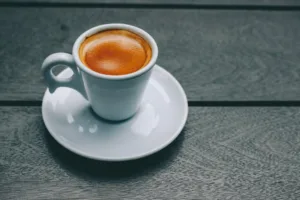
Bica / Cafe: The standard Portuguese espresso. Small, strong, served in a tiny cup. In Lisbon, it’s called a “bica” (legend says the name comes from “Beba Isto Com Acucar” – “Drink This With Sugar”). In Porto and the north, it’s called a “cimbalino” (named after the La Cimbali espresso machines that were once ubiquitous). Everywhere else, just “cafe” works.
Italiana / Italiano: A shorter, more concentrated espresso – basically a ristretto. If you find the regular bica not strong enough (respect), this is your order. Less water, more intensity, more flavor.
Curto: Similar to an italiana – a short espresso. Less water is used, making it more concentrated. Some cafes use “curto” and “italiana” interchangeably.
Cheio: A “full” espresso – the same amount of coffee but extracted with more water, filling the cup more. It’s slightly weaker than a regular bica but not as diluted as an abatanado.
Abatanado: Portugal’s equivalent of an Americano – an espresso diluted with hot water to create a longer drink. It’s served in a larger cup and is the go-to for people who want a milder, more sippable coffee. Not as common among locals, but tourists often find it a comfortable middle ground.
Carioca: A very weak espresso made by running water through already-used coffee grounds. It’s essentially a second extraction from the same dose. Very mild, very light – almost like coffee-flavored water. Some people order this in the evening when they want the ritual of coffee without the caffeine kick.
Milk Coffee Variations
Galao: Espresso with lots of foamed milk, served in a tall glass. The ratio is roughly one-quarter coffee to three-quarters milk. This is Portugal’s creamiest, mildest coffee option – perfect for those who find straight espresso too intense. Read our full guide to the galao for more details.
Meia de leite: Half coffee, half hot milk, served in a regular cup. Stronger than a galao but still creamy and approachable. This is the Portuguese equivalent of a cafe au lait and a popular breakfast choice.
Garoto: Espresso with just a small splash of milk – the Portuguese macchiato. The name means “little boy” – it’s a small, cute drink. Perfect when you want your espresso slightly softened but not milky.
Pingado: Very similar to a garoto – an espresso with a few drops (“pingado” means “dripped”) of milk. In practice, garoto and pingado are often used interchangeably, though purists might argue about subtle differences in the amount of milk.
Other Variations
Mazagran: Iced coffee served with lemon juice and sugar. Yes, lemon. This refreshing summer drink has roots in Portugal’s colonial history and is surprisingly delicious once you get past the concept. The acidity of the lemon complements the bitterness of the coffee in a way that works far better than you’d expect.
Cafe com cheirinho: Espresso with a “little smell” – meaning a splash of aguardente (Portuguese brandy) or another spirit. This is the after-dinner coffee for people who want their digestivo and their caffe in one cup. It’s more common in rural areas and traditional restaurants.
Descafeinado: Decaf espresso. Available everywhere and prepared the same way as regular espresso. No judgment attached to ordering decaf in Portugal, which is refreshingly civilized.
How to Order Coffee in Portugal
Ordering coffee in Portugal is wonderfully simple, but there are a few cultural notes that will help you blend in:
At the Counter vs. At a Table
Many Portuguese cafes have two price lists – one for the counter (balcao) and one for table service (mesa). Standing at the counter is cheaper, sometimes significantly so. A bica might be 0.70 euros at the counter and 1.20 euros at a table.
Locals who are just having a quick coffee almost always stand at the counter. It’s fast, social (you might chat with the barista or fellow customers), and economical. Sitting at a table is for when you’re meeting someone, reading the paper, or want to linger.
Sugar
Portuguese people tend to add sugar to their coffee – sometimes a lot of sugar. A sugar packet (or two) will automatically come with your espresso. This isn’t considered unsophisticated; it’s just how most people drink their coffee here. The dark roast of Portuguese espresso can be quite bitter, and sugar rounds out the flavor.
That said, ordering your coffee without sugar (sem acucar) is perfectly fine and increasingly common, especially among younger Portuguese.
Useful Phrases
- “Um cafe, por favor” – One espresso, please (the most common order in Portugal)
- “Uma bica” – An espresso (Lisbon term)
- “Um cimbalino” – An espresso (Porto term)
- “Um galao, se faz favor” – A galao, please
- “Uma meia de leite” – A half-milk coffee
- “Sem acucar” – Without sugar
- “Com gelo” – With ice
Timing
Unlike Italy, Portugal doesn’t have strict rules about when you can drink milky coffee. A galao in the afternoon is perfectly acceptable. That said, most Portuguese drink their milky coffees in the morning and switch to straight espresso after lunch. But nobody will judge you either way.
The Pastry Connection
You cannot talk about Portuguese coffee culture without talking about pastries. The two are inseparable.
Every cafe and pastelaria has a display case filled with sweet and savory pastries – and choosing what to eat with your coffee is half the fun. The most famous pairing is the pastel de nata (custard tart), a flaky, caramelized egg custard that might be Portugal’s greatest culinary invention.
But the pastel de nata is just the beginning. Other popular coffee companions include:
- Bola de Berlim: A Portuguese doughnut filled with custard cream. Rich, sweet, and perfect with a strong bica.
- Croissant: Yes, the French influence is real. Portuguese croissants are everywhere, often filled with ham and cheese for a savory option.
- Tosta mista: A grilled ham and cheese sandwich – Portugal’s version of a croque monsieur. A common breakfast or snack pairing with coffee.
- Queijada: Small cheese tarts from Sintra, with a sweet, slightly tangy filling.
- Travesseiro: Almond and egg cream pastry from Sintra – flaky, sweet, and dangerously addictive.
The combination of a well-pulled bica and a fresh-from-the-oven pastel de nata is, without exaggeration, one of life’s great simple pleasures. The bitter coffee cuts through the sweet custard, the flaky pastry provides texture, and for a moment, everything in the world feels right.
Cafe Culture – Lisbon vs. Porto
Portugal’s two main cities have slightly different coffee personalities:
Lisbon
Lisbon’s cafe culture is deeply woven into the city’s fabric. Historic cafes like A Brasileira (where the poet Fernando Pessoa’s bronze statue sits outside, eternally having coffee) and Pasteis de Belem (home of the original pastel de nata recipe since 1837) are destinations in their own right.
But beyond the famous spots, Lisbon is full of neighborhood cafes where life happens at coffee speed. In Alfama, old men sip bicas at tiny counters while the sound of fado drifts from a nearby rehearsal. In Bairro Alto, creative types fuel their late nights with espressos. In Cais do Sodre, the new wave of specialty coffee shops is bringing third-wave techniques to Portuguese beans.
Lisbon has also seen a surge in specialty coffee shops in recent years – places like Copenhagen Coffee Lab, Fabrica Coffee Roasters, and Dear Breakfast are bringing pour-overs, single-origin beans, and Scandinavian-style light roasts to a city that traditionally drinks dark. It’s an interesting evolution – the old and the new coexisting happily.
Remember: in Lisbon, an espresso is a “bica.”
Porto
Porto takes its coffee just as seriously as Lisbon but with its own northern character. The city feels slightly more traditional in its coffee habits, with magnificent old-world cafes that transport you back in time.
Cafe Majestic, opened in 1921, is Porto’s most famous coffee spot – a Belle Epoque masterpiece with ornate mirrors, carved woodwork, and waiters in bow ties. J.K. Rowling reportedly wrote parts of the first Harry Potter book here while living in Porto. It’s touristy and expensive by Portuguese standards, but worth visiting once for the atmosphere.
For a more local experience, head to the cafes along Rua de Santa Catarina or in the Ribeira district. Porto’s cafe culture is perhaps even more neighborhood-oriented than Lisbon’s – people have “their” cafe where the barista knows their order, and switching to a different one would feel like a minor betrayal.
Remember: in Porto, an espresso is a “cimbalino.”
Beyond the Cities
Coffee culture in smaller Portuguese towns and villages is just as rich, if quieter. Every town has its cafes, usually clustered around the main square. They serve as meeting points, news exchanges, and social hubs. In the Algarve, you’ll find cafes with terraces overlooking the coast. In the Douro Valley, you might sip your bica while looking out over the vineyards. In the Alentejo, the pace is even slower – coffee is an excuse to sit and watch the world not hurry by.
Portuguese Coffee Brands
Understanding Portuguese coffee brands helps you understand the coffee you’ll be drinking:
Delta: The market leader, founded in 1961 in Campo Maior. Delta supplies the majority of Portuguese cafes and is the espresso most locals grew up drinking. Their “Diamond” line is their premium offering. You’ll see the Delta logo on cafe awnings all across Portugal.
Nicola: Lisbon’s heritage brand, associated with the famous Cafe Nicola in Rossio square. Known for a slightly smoother roast than Delta. Nicola has been around since 1787, making it one of the oldest coffee brands in Portugal.
Sical: Another major player with a strong presence in Portuguese cafes. Owned by Nestle, Sical offers a range from traditional blends to specialty options.
Buondi: Despite the Italian-sounding name, Buondi is Portuguese. It’s popular in the north of the country and known for a robust, full-bodied espresso.
Specialty roasters: A growing number of small-batch roasters are emerging in Portugal’s cities – Flor da Selva, Olisipo, and others are sourcing specialty-grade beans and roasting them with more nuance than the big brands. This third-wave movement is still small but growing steadily.
Prices – What Coffee Costs in Portugal
One of the joys of Portuguese coffee culture is its affordability. Here’s what you can expect to pay:
- Bica/espresso at a local cafe (counter): 0.65 to 0.80 euros
- Bica/espresso at a local cafe (table): 0.80 to 1.20 euros
- Galao: 1.20 to 1.80 euros
- Meia de leite: 1.00 to 1.50 euros
- Espresso at a tourist area cafe: 1.00 to 1.50 euros
- Espresso at a specialty coffee shop: 1.50 to 3.00 euros
- Pastel de nata: 1.00 to 1.50 euros
For context, a cafe visit in Portugal with an espresso and a pastry might cost you 2.00 euros total. The same combination in London, Paris, or New York could easily be 7 to 10 euros. This affordability is part of why Portuguese people visit cafes so frequently – it’s not a financial decision, it’s just part of daily life.
Cafe Etiquette in Portugal
Portuguese cafe etiquette is relaxed compared to some other European countries, but there are a few things worth knowing:
Standing at the counter is normal and expected. Don’t feel awkward about it – this is how most Portuguese drink their coffee. Order, drink, pay, go. It’s efficient and sociable.
Tipping is appreciated but not expected. Leaving small change (rounding up to the nearest euro or leaving 10 to 20 cents) is a nice gesture. Nobody will be offended if you don’t tip, and nobody expects a percentage-based tip on a 0.70-euro coffee.
You usually pay when you’re done, not when you order. At the counter, you might order and pay immediately. At a table, the waiter will bring your order and you pay when you’re ready to leave. Some modern cafes have adopted a pay-first system, but it’s not the norm.
Don’t rush. Nobody will hurry you out of a Portuguese cafe. You can sit for hours with a single espresso, reading the newspaper or watching the world go by. The cafe belongs to you for as long as you want it.
WiFi and laptops. Traditional cafes might not have WiFi, and setting up a laptop could feel out of place. Specialty coffee shops and modern cafes are more laptop-friendly. Read the room – if everyone else is chatting and reading papers, maybe save the laptop for a different spot.
The Daily Coffee Rhythm
A typical Portuguese person’s coffee day might look something like this:
Morning (7-9 AM): A galao or meia de leite at home or at a cafe near work, paired with toast or a pastry. This is the milky coffee moment.
Mid-morning (10-11 AM): A bica at the cafe, maybe with a second pastry. This is the social coffee – quick, at the counter, catching up with regulars.
After lunch (1-2 PM): A bica to close the meal. In restaurants, this is automatic – the waiter will ask “cafe?” as naturally as breathing. Almost everyone says yes.
Afternoon (3-5 PM): Another bica if energy dips. Or a carioca if it’s getting late and caffeine sensitivity is a concern.
After dinner (9-10 PM): A final bica, possibly a cafe com cheirinho (with a splash of aguardente) if the evening calls for it.
That’s potentially four to five coffees a day – and it’s completely normal. Portuguese espresso cups are small, so the total caffeine intake is spread across many tiny doses rather than concentrated in one giant mug.
The Future of Portuguese Coffee
Portuguese coffee culture is evolving, though slowly and without losing its character. The third-wave specialty coffee movement has arrived, bringing lighter roasts, single-origin beans, pour-over methods, and higher prices. But it coexists with traditional cafes rather than replacing them.
Young Portuguese baristas are competing in international championships, Portuguese roasters are winning awards, and Lisbon and Porto are becoming destinations for coffee tourism. But the heart of Portuguese coffee remains the same: a tiny cup of dark, strong espresso, drunk quickly at a counter, for less than a euro, in a cafe that’s been serving the neighborhood for decades.
That combination of tradition and evolution, of affordability and quality, of speed and soul – that’s what makes Portuguese coffee culture special. It hasn’t been gentrified out of reach or turned into a lifestyle brand. It’s still coffee, made well, for everyone.
If you haven’t experienced it yet, put Portugal on your coffee travel list. Your taste buds, your wallet, and your appreciation for what coffee culture can be will all be better for it.
Frequently Asked Questions
What is Portuguese coffee called?
A standard Portuguese espresso is called a “bica” in Lisbon, a “cimbalino” in Porto, or simply a “cafe” everywhere. Other popular types include the galao (espresso with lots of foamed milk), meia de leite (half coffee, half milk), and garoto (espresso with a splash of milk).
Is Portuguese coffee stronger than Italian coffee?
Portuguese coffee is typically roasted darker than Italian coffee, giving it a bolder, more intense flavor. However, “stronger” depends on what you mean – the caffeine content is similar since both are espresso-based. The taste profile is darker and smokier in Portugal compared to Italy’s more balanced roast.
How much does coffee cost in Portugal?
An espresso at a local Portuguese cafe costs 0.65 to 1.00 euro at the counter and 0.80 to 1.20 euros at a table. A galao costs 1.20 to 1.80 euros. Specialty coffee shops charge more, typically 1.50 to 3.00 euros for an espresso. Portugal remains one of the most affordable countries in Western Europe for coffee.
What is the best coffee to order in Portugal?
Start with a bica (espresso) to experience the foundation of Portuguese coffee culture. If you prefer milky coffee, try a galao for something creamy or a meia de leite for a stronger milk coffee. Pair any of them with a pastel de nata for the quintessential Portuguese coffee experience.
Can you get specialty coffee in Portugal?
Yes, especially in Lisbon and Porto. Specialty coffee shops like Copenhagen Coffee Lab, Fabrica Coffee Roasters, and Dear Breakfast in Lisbon offer single-origin beans, pour-over methods, and lighter roasts. The specialty scene is growing but still coexists with Portugal’s strong traditional coffee culture.