

In Portugal, “café” refers to an espresso shot, the foundation of Portuguese coffee culture.

This drink is perfect for a quick caffeine boost and is enjoyed throughout the day. It’s typically served in a small cup and is strong and rich in flavor.
Choosing a café means embracing the simplicity and intensity of espresso, ideal for any time of day.
To order it, you would say, “Queria um café, por favor.”
Ingredients

1 Espresso Shot
How to order a Café in Portugal?
"Queria um café, por favor."
History and Origin
In Portugal, when you order a “cafe” (ka-FEH), you get a short, intense espresso shot – the backbone of Portuguese coffee culture. Coffee arrived in Portugal through its colonial connections with Brazil, which became the world’s largest coffee producer. By the early 20th century, espresso culture had taken root in Lisbon’s cafes, and the simple “cafe” became the nation’s default order.
Portuguese espresso is often described as slightly different from Italian espresso – it tends to be roasted a touch darker and served in slightly smaller quantities, resulting in an intensely concentrated shot.
How It’s Made
- 7-8 grams of finely ground, dark-roasted coffee
- High pressure extraction (9 bars)
- Volume: 20-25ml (slightly smaller than Italian espresso)
- Topped with a thick, dark crema
Portuguese cafes typically use blends heavy on robusta beans, which gives the coffee more body and a stronger caffeine kick compared to arabica-heavy Italian blends.
How to Order Cafe in Portugal
Say: “Um cafe, por favor” (oom ka-FEH, por fa-VOR). In Lisbon, you’ll also hear people order a “bica” (BEE-ka) – it’s the exact same thing, just Lisbon slang. In Porto, the local term is “cimbalino” (sim-ba-LEE-no), named after the La Cimbali espresso machines that were once ubiquitous.
For the full guide, see our guide to ordering coffee in Portugal.
When and Where Locals Drink It
The Portuguese drink cafe constantly – after breakfast, mid-morning, after lunch, mid-afternoon. The average Portuguese person drinks 4+ coffees per day. It’s always consumed at the counter of a “pastelaria” (pastry shop/cafe), often paired with a pastel de nata (custard tart).
The social ritual is important – a cafe break is never rushed. You stand at the counter, chat with the server, maybe read the newspaper, and take a moment to reset.
Variations
Starting from the basic cafe, Portugal offers many modifications:
- Cafe Italiano – an even shorter, more concentrated shot
- Cafe Pingado – cafe with a drop of milk
- Cafe Duplo – double espresso
- Abatanado – diluted, longer coffee
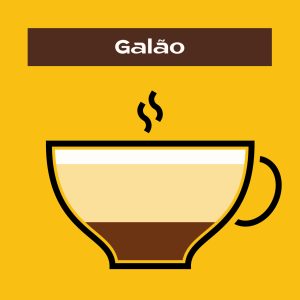
- Galao – cafe with lots of milk in a tall glass
- Meia de Leite – half coffee, half milk
Portuguese Cafe vs Italian Caffe
While both are espresso shots, there are subtle differences:
- Portuguese cafe uses more robusta beans (stronger, more bitter)
- Portuguese shots tend to be slightly smaller (20-25ml vs 25-30ml)
- The crema is usually darker and thicker
- Portuguese coffee is generally cheaper (0.60-0.80 euros vs 1-1.50 in Italy)
How to Make at Home
- Use a dark-roasted Portuguese blend (Delta, Nicola, or Sical are popular brands)
- Grind very fine for espresso
- Extract a short shot – aim for 20-25ml
- A Moka pot works well – use a 1-cup size and don’t fill the water past the valve
Frequently Asked Questions
What does “bica” mean in Lisbon?
Bica is Lisbon slang for a regular espresso (cafe). Legend says it stands for “Beba Isto Com Acucar” (drink this with sugar), though this is likely a folk etymology.
How much does a cafe cost in Portugal?
Between 0.60 and 0.80 euros at the counter – some of the cheapest espresso in Europe. Sitting at a table may cost 0.10-0.30 more.
Why is Portuguese coffee so strong?
Portuguese blends use more robusta beans than Italian blends. Robusta has roughly double the caffeine of arabica and a stronger, more bitter flavor.


Comments 1